 Angryturtle
Perplexity cites its sources. That's the one structural fact that separates it from a plain chatbot and makes it worth a dedicated look for local businesses — every answer comes with a visible list of links it pulled from, which means getting cited by Perplexity is closer to earning a link than earning a mention in an ordinary chat response.
That transparency also makes Perplexity a useful test case for understanding AI citation generally, because you can actually see which sources it picked and reason backward about why. This piece stays inside what's observable from that behavior, not a leaked ranking formula, because Perplexity hasn't published one.
How Perplexity's citation model actually works
Perplexity runs a retrieval-augmented pipeline: it searches the live web for a given query, ranks the results it finds, reads a selection of them, and writes an answer with inline citations pointing back to specific sources. Retrieval-augmented generation is the underlying mechanism — the model isn't answering purely from memory, it's grounding its answer in documents it just retrieved, which is also why Perplexity's answers change as the underlying web changes.
For a local business, this means the question isn't "does Perplexity know about me" so much as "does Perplexity's search step retrieve a page about me that's clear enough to cite." What makes Perplexity cite a website is really a question about your own crawlability and clarity, not about Perplexity's opinion of your business.
What earns a citation in practice
Pages that answer a specific question directly, with the answer near the top rather than buried under paragraphs of preamble, get cited more often than pages that make a reader (or a retrieval system) hunt for the fact. That's not unique to Perplexity — it's the same behavior that favors featured snippets in classic search — but Perplexity's citation-heavy format makes the pattern easier to observe directly.
Freshness plays a role that's worth taking seriously. Whether Perplexity favours recently updated content comes up often, and while there's no published recency window, a page that was last touched in 2021 competing against one updated last month for the same factual claim is at an obvious disadvantage if the fact in question is time-sensitive — hours, prices, availability.
Trust signals matter in a way that's specific to India. Which sources Perplexity treats as trustworthy for Indian queries is an open question without a published answer, but established directories, government and institutional sites, and larger publications appear to get cited more consistently than a brand-new, thin page with no other citations pointing to it anywhere. That's consistent with how retrieval-and-rank systems generally behave, not a Perplexity-specific quirk.
Schema and structured data still matter here
Whether schema markup helps Perplexity citations is a fair question, since Perplexity's retrieval step is closer to a search engine crawl than to Google's direct GBP access. Structured data doesn't force a citation, but it removes interpretive work for whatever's parsing the page — a clearly marked LocalBusiness schema block with hours and address is a fact Perplexity's system can lift cleanly, rather than a claim it has to infer from prose. The mechanics are covered in more depth in schema markup for AI search.
Perplexity versus ChatGPT versus Gemini
The three engines aren't interchangeable in what they're able to see. Perplexity's retrieval is closest to a transparent search engine. ChatGPT's browsing does something similar but shows citations less consistently. Gemini has the deepest integration with Google's own data, including Business Profiles, which neither Perplexity nor ChatGPT has direct access to. The full breakdown of how citations differ across ChatGPT, Perplexity and Gemini covers each in turn, and the head-to-head comparison of all three for Indian users is worth reading if you're deciding where to put effort first.
Tracking whether you're actually being cited
There isn't a public dashboard, from Perplexity or anyone else, that shows every citation your business has ever received. Tracking this in practice means running a defined set of representative prompts periodically and checking the results by hand or through a sampling tool, not watching a live counter — the same approach covered in measuring AI search visibility. Angryturtle's share-of-AI-voice tracking is built on that sampling approach; treat any claim of comprehensive, real-time AI citation tracking from any vendor with the same skepticism you'd apply to a promise of guaranteed page-one rankings.
Where this fits with GBP and Rank OS
Perplexity doesn't read your Business Profile directly, but a well-run profile still helps indirectly — it's often the source of the NAP details, category language, and description text that get echoed on your website and third-party listings, and those are exactly what Perplexity's retrieval can reach. Rank OS's AIO Readiness dimension scores that broader readiness across systems rather than betting on any single AI engine's specific behavior, since the underlying hygiene — structured data, consistent entity details, specific and current content — is what all three engines reward in overlapping ways.
Frequently asked questions
Does Perplexity use my Google Business Profile? No, not directly. Perplexity's retrieval works against the open web — your website, directories, review platforms, and other crawlable pages — not against Google's Business Profile data, which Google doesn't expose to outside AI systems.
Can I request a correction if Perplexity cites something wrong? There's no formal correction mechanism tied to a specific answer. The practical fix is correcting the source it cited — your website or the third-party page — since Perplexity re-retrieves on each new query rather than storing a fixed record.
Is a Wikipedia page necessary to get cited by Perplexity? No, though it can help for entity clarity in some cases. Wikipedia's role in AI citations for local businesses is more relevant to larger or well-known brands than to a typical single-location business, most of which are never going to have a Wikipedia entry and don't need one to be cited.
How often should I check whether Perplexity mentions my business? There's no fixed cadence, since Perplexity re-retrieves live each time and the same query can return different results week to week. A monthly or quarterly sample against a set of realistic customer prompts is a more honest approach than checking daily and reading noise as signal.
Stop guessing where you rank locally.
Rank OS scores your Google Business Profile the way Google's local algorithm does — relevance, review health, freshness, entity authority and AIO readiness — and shows you exactly what to fix.
Book a live demo →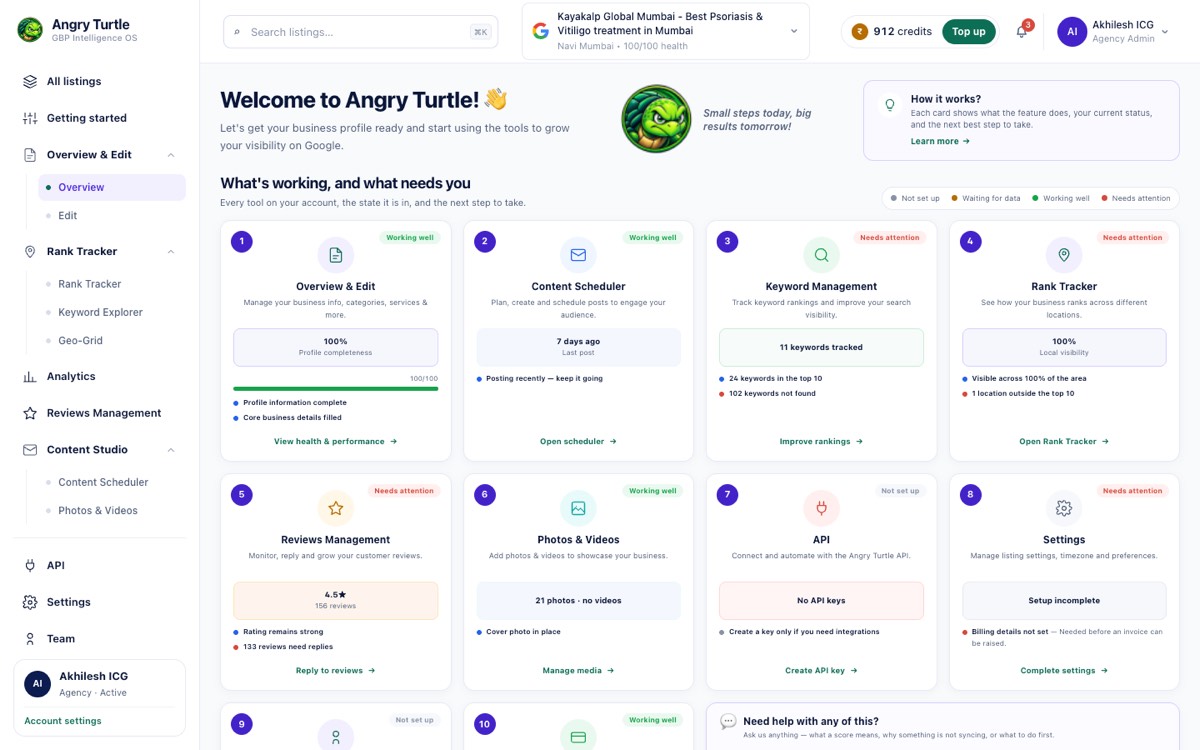

Related reading
Ready to have this run for you?
Book a free audit — we'll show you where you stand in 48 hours.