 Angryturtle
Local SEO for Car Dealerships and Service Centres
·
Car dealerships run two businesses under one roof, and Google treats them almost like two different search intents. Someone searching "Maruti showroom near me" wants to test-drive and negotiate a purchase. Someone searching "car service center near me" a few months later, often the same customer, wants an appointment slot and a fair labour estimate. Local SEO for car dealerships and service centres in India has to serve both of these without the listing structure collapsing into confusion — and dealership groups running an OEM franchise have a constraint most local businesses don't: brand naming rules set by the manufacturer, not the dealer.
That naming constraint is worth addressing first, because it trips up more dealership listings than any algorithmic factor does.
Manufacturer co-op rules shape the listing before SEO even starts
Most authorized dealerships operate under a franchise agreement that dictates how the manufacturer's brand name can appear in the business name field — "XYZ Motors — Authorized Maruti Suzuki Dealer" versus just "XYZ Motors" versus a manufacturer-mandated exact format can all be different requirements depending on the OEM and region. Getting this wrong isn't just an SEO issue; it can trigger a Google guideline flag for keyword-stuffing the business name, or a co-op marketing compliance issue with the manufacturer separately from anything Google does.
The safe approach is to use the exact legal or DBA name the dealership operates under, matched consistently across the Google Business Profile, the website, and every directory listing — and to add the brand relationship through category and attributes rather than by stuffing it into the name field. The right GBP categories for a dealership usually pair a primary like "Car Dealer" or the manufacturer-specific category where Google offers one, with secondary categories for "Used Car Dealer" or "Car Repair" if those services genuinely apply at the same location.
Sales and service are different search intents, sometimes different listings
A dealership with a sales showroom and a separate service centre, even a short distance apart, generally needs separate Google Business Profiles — one per physical location, matching the actual entrances and operating hours, rather than one combined listing trying to serve both intents. Combining them under one profile means whichever intent didn't get chosen as primary category loses visibility in the local pack for its own searches.
Where sales and service share a single building and address, the profile has to work harder in its content: services list, posts, and description all need to speak to both a buyer evaluating a purchase and a current owner needing maintenance, without either one drowning the other out. GBP post ideas generally cover this kind of dual-audience posting cadence; for dealerships specifically, alternating a sales-focused post (new model arrival, festive offer) with a service-focused one (seasonal maintenance reminder, extended service hours) keeps both audiences served across a month rather than skewing entirely toward whichever team controls the posting calendar.
What actually shows up when someone searches for a test drive
Test-drive scheduling is closer to an appointment booking than a walk-in, and a booking link in the right field — whether that routes to a lead form, a WhatsApp number, or a call — removes friction for a searcher who's ready to act but doesn't want to call a landline during business hours. This is a smaller lift than most dealerships assume, and one that a surprising number of listings still skip in favour of just listing a generic phone number.
Photos matter differently here too. A showroom floor with current-year models, rather than an old exterior shot, tells a browsing prospect the inventory is real and current. GBP attributes covering accessibility, appointment requirements, and available services (financing on-site, trade-in accepted) round out what a comparison-shopping buyer is actually trying to establish before choosing which showroom to visit.
Service centre reviews carry different weight than sales reviews
Service centre reviews skew toward complaints about billing transparency, wait times, and whether the promised work actually got done — a different review pattern from sales reviews, which tend to focus on negotiation experience and delivery timelines. Responding to negative reviews matters more for service centres specifically, because an unaddressed billing complaint sitting on a profile reads as unresolved to every subsequent searcher checking whether this service centre can be trusted with a car.
Getting more Google reviews works best when timed to a completed service pickup or a delivered purchase, not sent as a blanket monthly campaign — a customer just handed their car keys back is in a far better position to leave a specific, useful review than one contacted at random.
Multi-location dealership groups
Dealership groups running several showrooms or service centres across a city, or across multiple cities for the same OEM franchise, run into the same cannibalization and consistency issues covered in our multi-location local SEO strategies piece and managing 100+ GBP listings at scale. The dealership-specific wrinkle is that a group often has near-identical business names across branches ("XYZ Motors — City A," "XYZ Motors — City B"), which is fine for branding but means every other field — address, hours, services, photos — has to carry the differentiation, since the name alone won't. Groups working with an outside team for this, rather than handling it internally across every branch, generally look at a local SEO agency partnership specifically to keep the process consistent branch to branch.
Geo-grid rank tracking is useful here because dealership catchment areas are genuinely large — someone will drive 15-20 minutes for a dealership visit in a way they wouldn't for a salon — so rank needs checking across a wider radius than most local categories require, not just at the exact address.
Common mistakes specific to this category
Beyond the naming-compliance issue above, the recurring pattern is stale inventory signals: a showroom listing that still shows last year's model lineup in photos and posts months after the new model launched, or a "financing available" attribute left unchecked when it's actually offered. Common local SEO mistakes covers the general list; the dealership-specific version is almost always a freshness problem, not a fundamentals problem, since most dealership groups do get the basic setup right and then stop maintaining it.
When the service centre was invisible next to its own showroom
Highway Motors ran its showroom and service centre from the same building in Coimbatore, but the GBP listing's photos were entirely showroom floor shots of new cars, and the services list mentioned nothing about servicing or repairs. A customer who'd bought a car there two years earlier and needed a routine service searched "car service center near me," found a competitor three kilometres away instead, and never realized Highway Motors serviced its own cars on-site because the listing gave no signal of it.
Adding a dedicated services section — oil change, periodic maintenance, insurance claim assistance — as its own secondary category and service listing, alongside the showroom content, and alternating GBP posts between new-model announcements and service reminders, brought that search back into view for a business that had been doing the work all along without saying so.
Who shouldn't spend on this yet
A dealership group that's already selling every unit its allocation allows, with a waitlist on popular models, gets little from local SEO spend aimed at driving more showroom footfall — the constraint is inventory allocation from the manufacturer, not visibility. And no amount of listing work fixes a service centre with a real pattern of billing disputes or work not completed as promised; a better-ranked profile just exposes that pattern to more searchers faster. An honest local SEO audit should confirm which constraint a dealership is actually up against before spending against the wrong one.
FAQ
Should a dealership's sales and service departments have separate Google Business Profiles? In most cases, yes, if they're at different addresses or entrances — each represents a distinct location Google should index separately. If they genuinely share one address and entrance, one profile can work, but the content needs to serve both audiences deliberately.
Can a dealership use the manufacturer's brand name freely in its Google Business Profile? Only according to the franchise agreement's naming rules and Google's guideline against keyword-stuffing business names. The relationship to the brand belongs in category, attributes, and description, not forced into the name field beyond what's contractually specified.
What matters more for a dealership's Google visibility, sales reviews or service reviews? Both matter, for different searches. A prospective buyer weighs sales reviews; an existing owner weighs service reviews. A dealership with strong sales reviews and weak, unanswered service complaints is still losing visibility with a meaningful share of its own existing customer base.
How wide should a dealership think about its service area for local SEO? Wider than most local categories — buyers routinely travel 15 to 20 minutes or more for a dealership visit, so rank tracking and content should account for a broader catchment than the immediate neighbourhood.
Does adding service-centre content to a combined listing hurt the sales-focused searches that already work? Not if both are represented as distinct services with their own descriptions — the risk is a single blended description that serves neither audience, not the act of listing both.
Should a dealership mention manufacturer promotions or festive offers on GBP posts? Yes, timed and worded within whatever co-op marketing compliance the manufacturer requires — a GBP post referencing genuine festive pricing captures a real, time-sensitive search pattern around those periods.
Stop guessing where you rank locally.
Rank OS scores your Google Business Profile the way Google's local algorithm does — relevance, review health, freshness, entity authority and AIO readiness — and shows you exactly what to fix.
Book a live demo →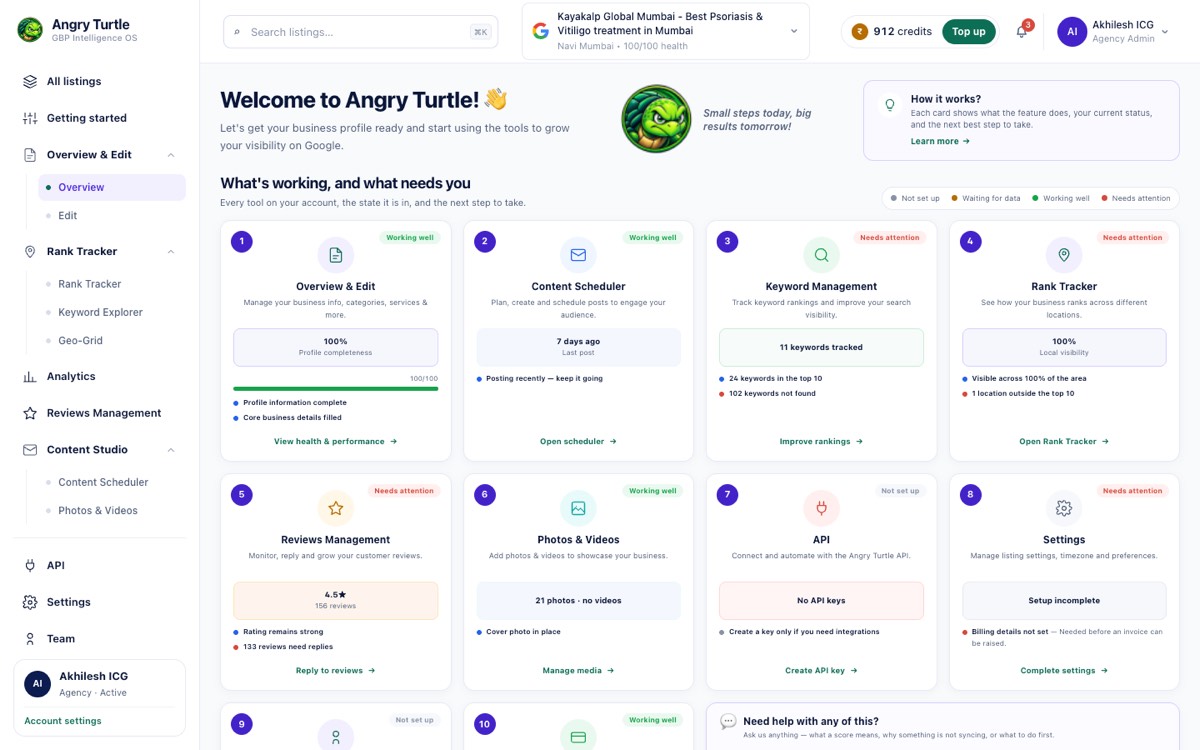

Related reading
Ready to have this run for you?
Book a free audit — we'll show you where you stand in 48 hours.