 Angryturtle
Law Firm SEO in Delhi
Practice-area categories, firm versus individual listings, and the advertising limits Indian advocates work under, for law firms and advocates in Delhi.
·
A client sitting in a Gurgaon office, searching "corporate lawyer Nehru Place" or "property dispute lawyer Saket," is running a Delhi-specific version of a search that plays out differently in every part of the city. Delhi's legal market is organized around its courts and around a handful of named commercial pockets — Connaught Place, Nehru Place, Saket district courts, Karkardooma — and a firm's Google Business Profile earns almost nothing from a vague "New Delhi" address when the actual competition is happening at the level of which court complex or commercial block a firm sits nearest to.
Delhi's own addressing convention adds friction that most SEO advice never accounts for: a block and colony name — "C-Block, Defence Colony" or "F-Block, Connaught Place" — carries more locating weight for a Delhi searcher than the street number typically does, and a profile that skips it or buries it inside a generic locality string reads as less precise to both a person and to Google's local ranking system than one that states it plainly.
Court and commercial cluster proximity
Delhi's district courts, spread across Saket, Karkardooma, Rohini, Tis Hazari and Patiala House, each anchor a genuine local cluster of litigation practices, and a firm's proximity to the specific court it appears before regularly is a real factor in who shows up for a nearby search. A firm handling matters mainly at Saket district court competing for "lawyer near Saket court" is up against a narrower, geographically tighter set of competitors than the same firm would face if it tried to rank city-wide for "lawyer in Delhi." Nehru Place and Connaught Place run a different pattern entirely, dominated by corporate, IP and commercial-litigation firms serving businesses rather than walk-in litigants, where court proximity matters less than proximity to the corporate clients themselves.
A firm operating across more than one of these clusters — a common setup for a mid-sized Delhi firm with both a litigation and a corporate practice — needs each cluster's listing, whether a full separate profile for a genuinely separate office or a services-list distinction within one, to reflect what's actually true of that location rather than a single generic firm-wide description repeated everywhere.
The category and services list still do most of the work
Nothing about Delhi changes the underlying category and services-list mechanics covered fully in local law firm SEO in India — the right primary category ("Lawyer," "Attorney," or a narrower option where available) and a services list naming actual practice areas plainly, rather than a generic "legal services" description. What Delhi adds is the volume of firms competing inside each named cluster; a Nehru Place IP litigation firm with a vague services list is genuinely harder to distinguish from a dozen similarly vague neighbours than the same firm would be in a smaller, less dense city.
Individual advocates and joint chambers
Delhi's district courts have a long tradition of shared chamber arrangements, several independent advocates working out of one physical address near a court complex without being part of the same firm. Each advocate in that arrangement should generally hold their own listing under their own name rather than one shared firm listing covering unrelated practices, because Google's entity system doesn't distinguish "shares an address with" from "is the same business as," and a shared listing muddies which advocate a searcher is actually finding. Where a firm genuinely is one entity with multiple partners, the opposite applies — multi-location local SEO strategies covers the general discipline, and the Delhi-specific point is naming which partner covers which court or practice area explicitly, since a client picking between a Nehru Place corporate specialist and a Saket family law specialist within the same firm needs that distinction stated, not implied.
What compliance actually restricts here
Delhi carries no separate advertising allowance beyond the Bar Council of India's national restrictions on solicitation and promotional claims, and a firm shouldn't assume a large, competitive legal market like Delhi's justifies more assertive marketing language than a smaller city would. A profile stays factual: practice areas, experience, court jurisdictions handled, nothing that reads as an outcome guarantee or a comparative claim against another named firm. Anything genuinely uncertain is worth confirming with the Bar Council of Delhi directly rather than relying on marketing guidance to interpret it.
Reviews follow the same low-volume, high-weight pattern described nationally, and getting more Google reviews applies with the same case-closure timing and non-pressuring tone, while responding to negative reviews has to stay general enough to avoid discussing any specific matter publicly, even a matter the client has themselves referenced. A firm's GBP Q&A section deserves the same watchfulness given how often a specific situational question gets posted there by someone doing pre-hire research.
A Nehru Place firm that never touched its listing
A five-partner corporate and IP litigation firm in Nehru Place had its Google profile set up in 2018 and never revisited since. The category sat at plain "Lawyer," the services list read "corporate law, litigation" with nothing more specific, and the address string omitted the block number entirely, just "Nehru Place, New Delhi." Two partners who'd since built genuine specializations — one in trademark litigation, one in startup corporate structuring — had no reflection of that anywhere on the profile, and the firm was losing exactly the specific, high-intent searches ("trademark lawyer Nehru Place," "startup lawyer Nehru Place") it should have been winning outright. The fix wasn't complicated: correct block-level address, a services list naming both specializations plainly, and a description update reflecting the actual current partner roster rather than the 2018 one. None of it required new content or a redesign, just accuracy the firm had let lapse for six years.
When it doesn't make sense to invest here
A senior Delhi advocate with a docket built entirely on judicial fraternity referrals and long-standing corporate relationships, with no interest in growing beyond that base, gains little from an actively managed local search presence. The upside of local SEO is capturing new-client discovery a firm isn't already getting through referral, and a practice that's already full through referral is better served keeping its listing basic and accurate than investing time in a channel it doesn't need.
Entity consistency across Delhi's various legal directories and the general business listing sites in India is still worth a periodic check regardless, since entity authority issues tend to accumulate quietly over years, the same recurring pattern common local SEO mistakes describes generally. For firms deciding whether to manage this internally, our Delhi GBP management guide and the Delhi local SEO agency overview cover the operational side. Angryturtle helps Delhi legal practices keep court-cluster-accurate, compliant Google Business Profiles across partners and offices.
Frequently asked questions
Does a Delhi law firm's block or colony name matter for local search? Yes. Block and colony naming carries real locating weight in Delhi, and a profile that states it plainly, rather than folding it into a generic "New Delhi" address, matches how both searchers and Google's local ranking actually read location here.
Should a firm operating near two different Delhi courts have one listing or two? It depends on whether both are genuinely separate offices or one firm serving both courts from a single location. A genuinely separate office at each court benefits from its own accurate listing rather than one generic profile trying to represent both.
Can a Delhi advocate mention a client's case outcome in marketing content? No. Bar Council of India restrictions on solicitation and outcome claims apply nationally with no city-specific exception, and Delhi's competitive market doesn't change that baseline.
How should shared-chamber advocates near a Delhi court handle their listings? Generally each advocate should hold an individual listing under their own name rather than a single shared listing, since sharing a physical address doesn't mean sharing a practice, and Google's entity matching needs that distinction to be explicit.
Why do Delhi law firms tend to have fewer Google reviews than other local businesses? The same reason as everywhere: legal matters are private, and most satisfied clients simply don't think to leave a review once a matter closes. This makes each review that does exist carry more weight with the next prospective client.
Is it worth investing in local SEO for a Delhi firm that's already full through referral? Usually not, beyond keeping the basic listing accurate. Local search visibility mainly helps capture new-client discovery a firm isn't already getting through referral, so a firm already at capacity through referral has little to gain from active investment here.
Stop guessing where you rank locally.
Rank OS scores your Google Business Profile the way Google's local algorithm does — relevance, review health, freshness, entity authority and AIO readiness — and shows you exactly what to fix.
Book a live demo →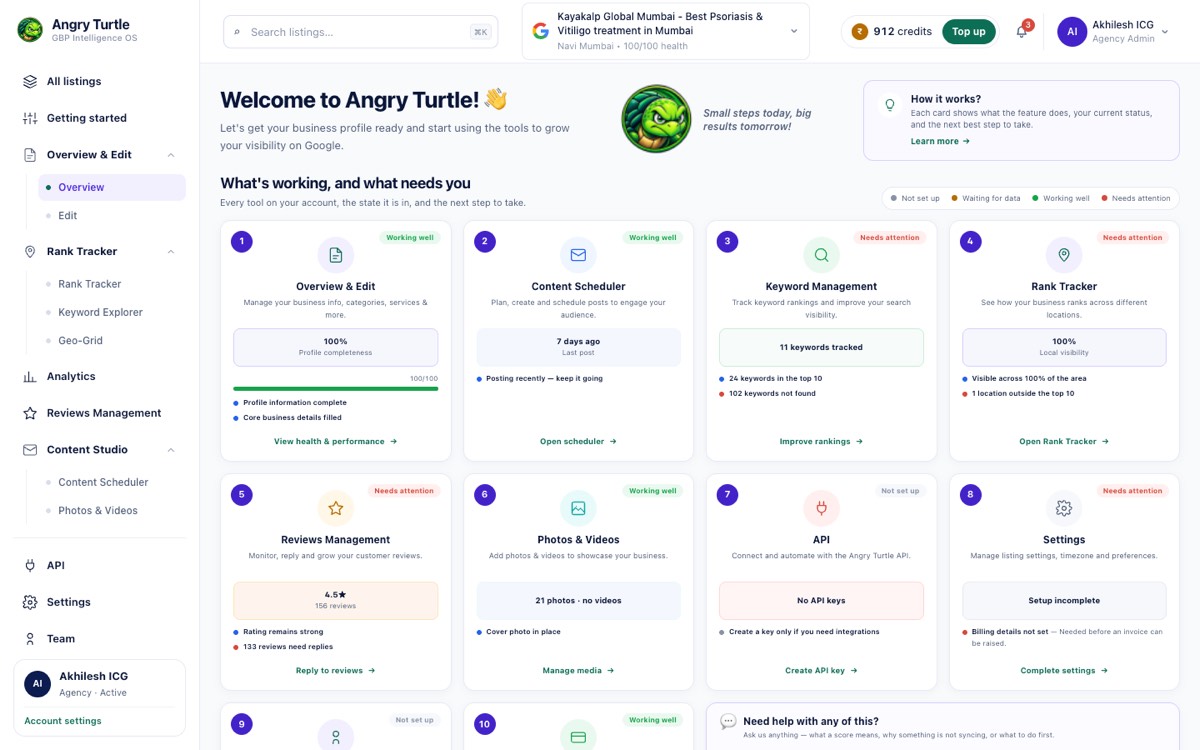

Related reading
Ready to have this run for you?
Book a free audit — we'll show you where you stand in 48 hours.