 Angryturtle
Law Firm SEO in Mumbai
Practice-area categories, firm versus individual listings, and the advertising limits Indian advocates work under, for law firms and advocates in Mumbai.
·
A Bandra advocate and a Fort-based litigation firm are not competing for the same client, even though both sit inside "law firm SEO Mumbai." Mumbai's legal market splits by building and by neighbourhood in a way most local SEO advice glosses over: Fort and Nariman Point carry the older corporate and litigation practices clustered near the Bombay High Court, BKC has pulled in the newer corporate, M&A and IP-heavy firms serving the financial sector around it, and Bandra sits somewhere between the two, with a mix of family law, property, and boutique practices working out of smaller offices. A firm's Google Business Profile has to name its actual location precisely, because "Nariman Point" and "BKC" read as different markets to both a searcher and to Google's local ranking system, whatever the shared Mumbai city label implies.
Addressing in Mumbai adds a layer most cities don't have. A firm's actual address is often "402, Mittal Chambers" or "3rd floor, Raheja Chambers" rather than a street number, and that building name is frequently how a court clerk, a fellow advocate, or a returning client actually locates the office. Leaving the address field as a generic Nariman Point pin without the building name in it costs a firm exactly the kind of precise, high-intent search — "advocate in Mittal Chambers" or "law firm Raheja Chambers" — that a Mumbai legal searcher who already has a referral is typing.
Contents
- Category and building-level addressing
- Court proximity as a real ranking factor
- Individual advocate versus firm listings
- When a referral-driven Mumbai practice doesn't need this
- Reviews a Mumbai legal practice actually gets
- Bar Council advertising restrictions
- Frequently asked questions
Category and building-level addressing
The primary category choice works the same way here as it does nationally, covered in full in local law firm SEO in India — "Lawyer," "Attorney," or a narrower legal-services category, plus the specific practice areas named in the services list rather than left implicit. What changes in Mumbai is the address field's second job. Beyond satisfying Google's format requirements, the building name inside that address is a real search term for a category where clients often arrive already knowing roughly which building or chamber they're heading to, having gotten the name from a referral rather than a map search. A profile that buries the building name inside a generic locality string is invisible to that exact query.
The practice-area category choice also interacts with which cluster a firm sits in. A BKC-based corporate or IP firm competing for "startup lawyer BKC" or "IP lawyer BKC" is up against a different set of firms than a Fort-based litigation practice competing for "criminal lawyer Fort Mumbai" — same city, functionally separate markets, and a category mismatch costs more in BKC specifically because the corporate-law search intent there is narrower and more specific than general litigation search elsewhere in the city.
Court proximity as a real ranking factor
Proximity to the Bombay High Court and the various district and sessions courts genuinely shapes search behaviour for litigation practices in a way it doesn't for a corporate firm working mostly on contracts and deals. A litigant searching "lawyer near Bombay High Court" is looking for exactly that — someone who can appear without a long commute on a hearing date — and Google's local pack weights that proximity heavily for the query. Fort's dense concentration of litigation firms exists partly because of this; being three minutes from the court building is a real operational and search advantage, not just a historical accident of where old chambers happened to open.
A firm working mostly corporate or transactional matters out of BKC doesn't carry the same proximity pressure, since that work rarely involves regular court appearances, and BKC's addressing should reflect its actual client base and specialization rather than trying to compete on a court-adjacency angle it doesn't actually have.
Individual advocate versus firm listings
A solo advocate and a multi-partner firm need genuinely different profile structures in Mumbai, more so than in most local categories. An individual advocate practising out of a shared chamber space, common in Fort and around the sessions courts, should generally list under their own name rather than a generic firm name that several unrelated advocates might share an address with — sharing a building doesn't mean sharing a practice, and Google's entity matching gets confused when several unrelated listings claim the same building without distinguishing which advocate is which.
A multi-partner firm with distinct practice areas per partner benefits from being explicit about which lawyer handles which specialization, the same principle covered generally in multi-location local SEO strategies for firms operating across more than one office — a BKC corporate firm with a partner handling M&A and another handling IP litigation should say so plainly in the services list and description, rather than presenting the firm as one undifferentiated corporate-law entity.
When a referral-driven Mumbai practice doesn't need this
Not every Mumbai practice needs an actively managed Google presence. A senior advocate whose docket fills entirely through judicial fraternity referrals and repeat corporate clients, with no ambition to take on new practice areas or expand beyond an existing relationship base, may reasonably decide a basic, accurate listing is enough and skip an ongoing engagement. Local search visibility mainly helps a firm capture new-client discovery it isn't already getting through referral, and a practice that's already at capacity through referral gains little from more visibility, beyond making sure the basic listing doesn't actively mislead someone who does search.
Reviews a Mumbai legal practice actually gets
Review volume for legal practices in Mumbai runs thin for the same reason it does nationally — legal matters are private and few clients think to leave one — but Mumbai adds a wrinkle worth naming. A BKC corporate client, often a startup founder or in-house counsel at a listed company, is somewhat more likely to leave a professional Google review than a Fort litigation client dealing with a personal or family matter, simply because the underlying relationship is more transactional and less sensitive. Getting more Google reviews still applies broadly, timed respectfully to matter closure, but a firm shouldn't expect the same review volume across a mixed corporate-and-litigation practice, and shouldn't read a lower litigation-side review count as a problem to fix.
Responding to negative reviews needs the same discipline in Mumbai as anywhere: no case specifics in a public reply, even to correct a client's account, and a firm's GBP Q&A section needs the same caution when a specific situational question gets posted there.
Bar Council advertising restrictions
The Bar Council of India's restrictions on advertising and solicitation apply in Mumbai exactly as they do everywhere in the country, and there is no city-specific exemption or lighter interpretation worth relying on. A profile description should stay factual — practice areas, years in practice, court jurisdictions — and avoid anything that reads as a promotional claim or an outcome guarantee. This is described in full in local law firm SEO in India, and a Mumbai advocate or firm should treat that as the baseline compliance reading, confirming anything genuinely uncertain with the Bar Council of Maharashtra and Goa rather than an SEO provider's interpretation of the rule.
Entity consistency matters here too. Mumbai has enough legal directories and chamber-association listings that a firm's name, building address, and practice-area description can drift out of sync across them over time, and entity authority is worth checking specifically for a Mumbai practice for that reason, alongside the general business listing sites in India that also carry legal-category listings.
The recurring failure in this category, described generally in common local SEO mistakes, is a profile set up once at founding and left untouched through a building move or a partner change, and Mumbai's building-name addressing makes that specific failure more costly than it would be in a city where the address is a plain street number.
Firms weighing whether to handle this internally or bring in outside help often start with a local SEO agency conversation, and for Mumbai specifically, our Mumbai GBP management guide and the Mumbai local SEO agency overview cover the operational side beyond what's legal-specific here. Angryturtle helps Mumbai legal practices keep building-accurate, compliant Google Business Profiles across chambers and offices.
Frequently asked questions
Does a Mumbai law firm's building name actually matter for search? Yes. Many Mumbai legal addresses are known by chamber or building name rather than street number, and clients or fellow advocates often search using that name directly. Leaving it out of the address field or description means the profile is invisible to that specific search.
Is proximity to the Bombay High Court a genuine ranking advantage? For litigation practices, yes — a search like "lawyer near Bombay High Court" weights proximity heavily, which is part of why Fort has such a dense concentration of litigation firms. A BKC corporate firm without regular court appearances doesn't carry the same proximity pressure.
Should a solo advocate sharing chamber space with others list under their own name or a firm name? Generally their own name, especially in shared-chamber areas like Fort, since several unrelated advocates sharing one address without individual distinction confuses Google's entity matching and makes each advocate harder to find individually.
Can a Mumbai law firm mention successful case outcomes on its Google profile? No. Bar Council of India rules restrict solicitation and promotional advertising for legal services nationally, with no city-specific exemption. A profile should stick to factual practice-area and experience information.
Do Fort litigation firms and BKC corporate firms compete for the same searches? Rarely. They serve different client bases and different search intent, and a firm in one cluster gains little by trying to compete on the other cluster's terms rather than being specific about its own specialization and location.
Does a corporate practice in BKC need the same review-generation effort as a litigation practice? Not necessarily the same volume expectation. BKC's more transactional corporate clients tend to leave professional reviews somewhat more readily than litigation clients dealing with private, personal matters, and a firm shouldn't treat a naturally lower litigation-side review count as a failure to fix.
Stop guessing where you rank locally.
Rank OS scores your Google Business Profile the way Google's local algorithm does — relevance, review health, freshness, entity authority and AIO readiness — and shows you exactly what to fix.
Book a live demo →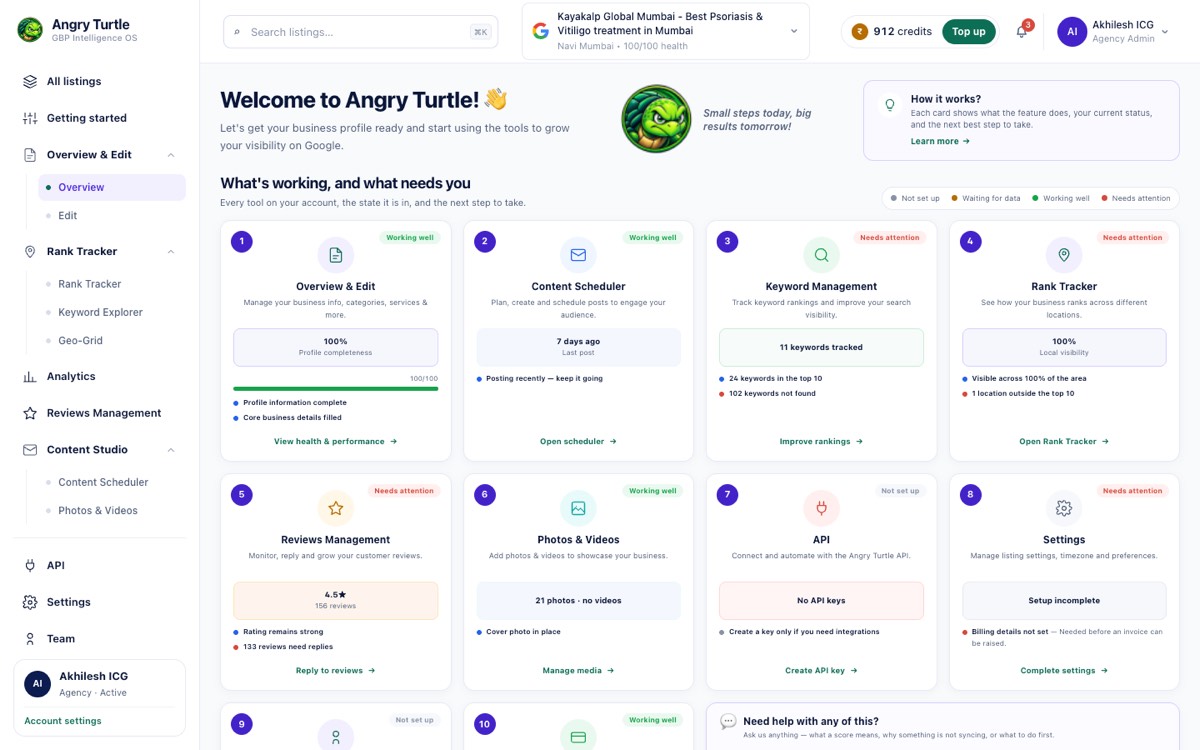

Related reading
Ready to have this run for you?
Book a free audit — we'll show you where you stand in 48 hours.